How To Use a Snatch Block
What is a Snatch Block?
To put it simply, a snatch block is a special type of heavy-duty pulley that has a side plate that swings open. Typically, it is made of metal and designed for pulling heavy and large loads with less force.
It usually features a flexible side plate (such as the ARB 10100020A Snatch Block above) which allows for easy threading of a winch cable, effectively doubling the winch’s pulling capacity.
Additionally, this versatile tool can be used to change the direction of the winch cable. While snatch blocks are primarily used for lifting overhead cargo or hauling heavy loads, they are commonly employed in the automotive industry as a winch accessory in recovery situations.
As such, a tool like the ARB Snatch Block is an essential device for any offroading enthusiast looking to enhance their winching capabilities.
How to Use a Snatch Block?
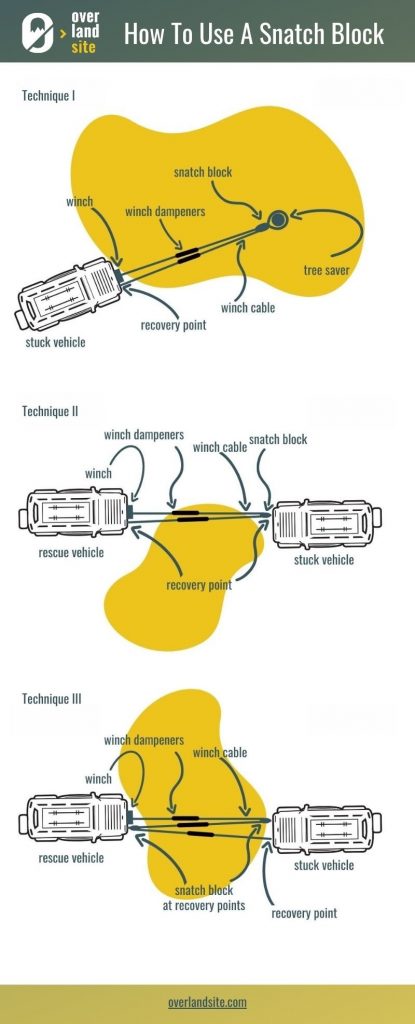
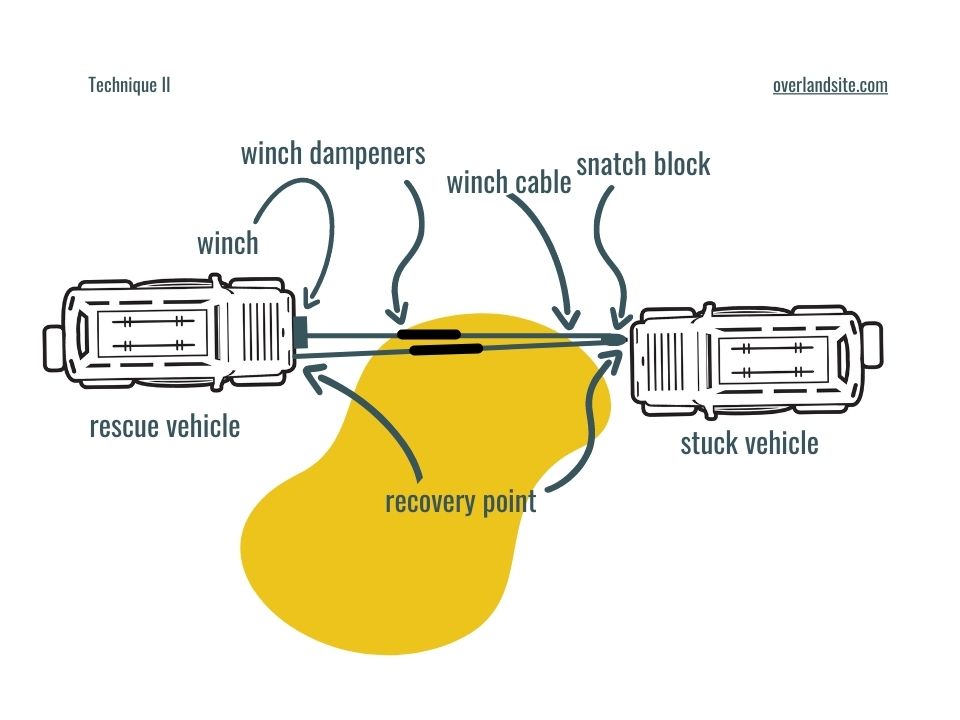
Using a snatch block can greatly simplify offroad recoveries, but safety should always be a top priority. To safely and effectively use a snatch block to recover a stuck vehicle, follow these steps:
- First, park the towing vehicle on a stable and level surface if possible
- Next, disengage the clutch on the winch and pull out the winch rope/cable until you have reached the stuck vehicle.
- Open the side plate of the snatch block and thread the winch cable through, ensuring that it is fully secured
- Now, you have to connect and secure the heavy-duty shackle to the snatch block
- At this point, you need to connect the heavy-duty shackle to a sturdy and reliable anchor point on the stuck vehicle
- You can then pull the winch rope through the snatch block and connect it (the hook) back to the recovery vehicle’s anchor point
- Before engaging the winch, be sure to use line dampeners on the winch cable for added safety
- Finally, engage the clutch on the winch and begin winching, allowing the snatch block to work its magic and double the winch’s pulling capacity
By following these steps and using the ARB Snatch Block, you can safely and effectively recover a stuck vehicle in off-road situations.
What Types Of Snatch Blocks Are There?
Snatch blocks come in a variety of sizes, designs, and mechanisms. Broadly speaking, there are three types of snatch blocks based on their mechanism and design: those with a hook, those with a shackle, and those with a flexible side plate, also known as a swing block.
Of these, the swing block type is the most commonly used snatch block for recovering vehicles due to its versatility and ease of use.
How Does a Snatch Block Work? (Three Ways to Use)
A snatch block is a versatile tool that can be used in many different ways. Its primary uses include overhead lifting, vehicle recovery, and towing broken down vehicles on the highway. In this post, we will elaborate on these uses.
How Do You Attach A Snatch Block?
To attach a snatch block, simply open the side plate, thread the cable or line from the winch through it, and close it securely to ensure that the wire is firmly in place. For a visual demonstration of how to use a snatch block, you may refer to the above video.
How Do You Increase The Pulling Power Of A Winch?
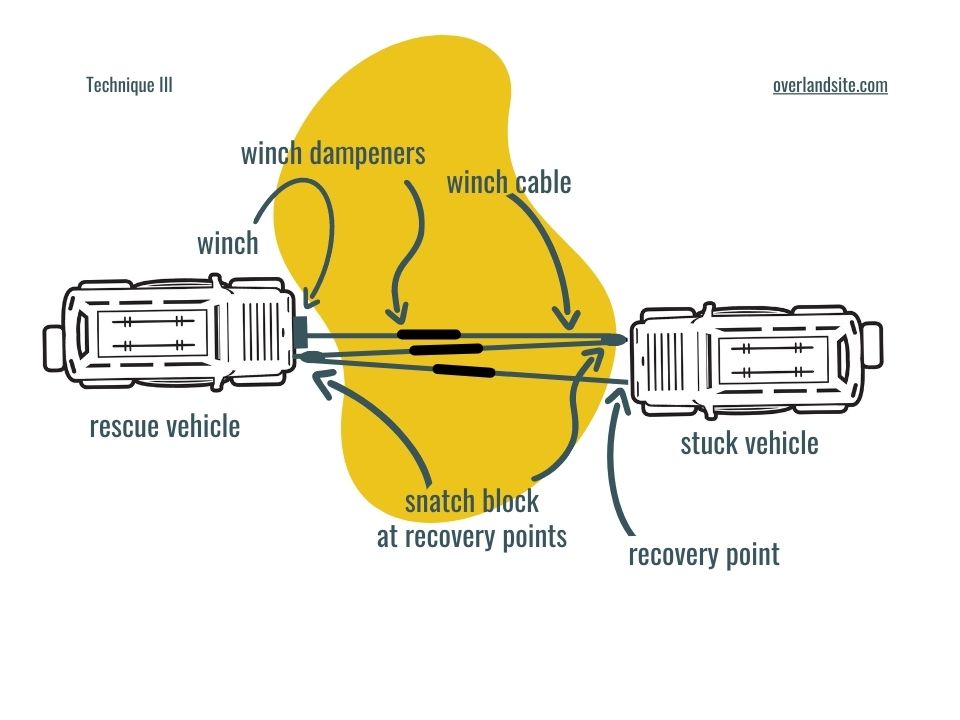
Increasing the pulling power of a winch is possible with the use of a snatch block pulley system.
This system effectively doubles the pulling capacity of a winch and can even increase it further depending on the number of snatch blocks used.
What Are The Benefits Of Using A Snatch Block For Overhead Lifting Or Vehicle Recovery?
There are numerous benefits to using a snatch block for overhead lifting or vehicle recovery. Firstly, a high-quality snatch block, such as the ARB Snatch Block, can effectively double the pulling power of a winch, making it easier to recover vehicles or lift heavy cargo.
Additionally, using a snatch block can significantly reduce stress on the cable, which helps to prolong its lifespan.
With a snatch block, you can avoid the need for additional heavy-duty equipment like crane motors or winch winders, making it a cost-effective and versatile solution for a variety of off-roading applications.
How to Recover a Vehicle from a Ditch or In the Woods
When recovering a vehicle from a ditch or in the woods, a snatch block is a useful tool to have. Here’s how you can use it:
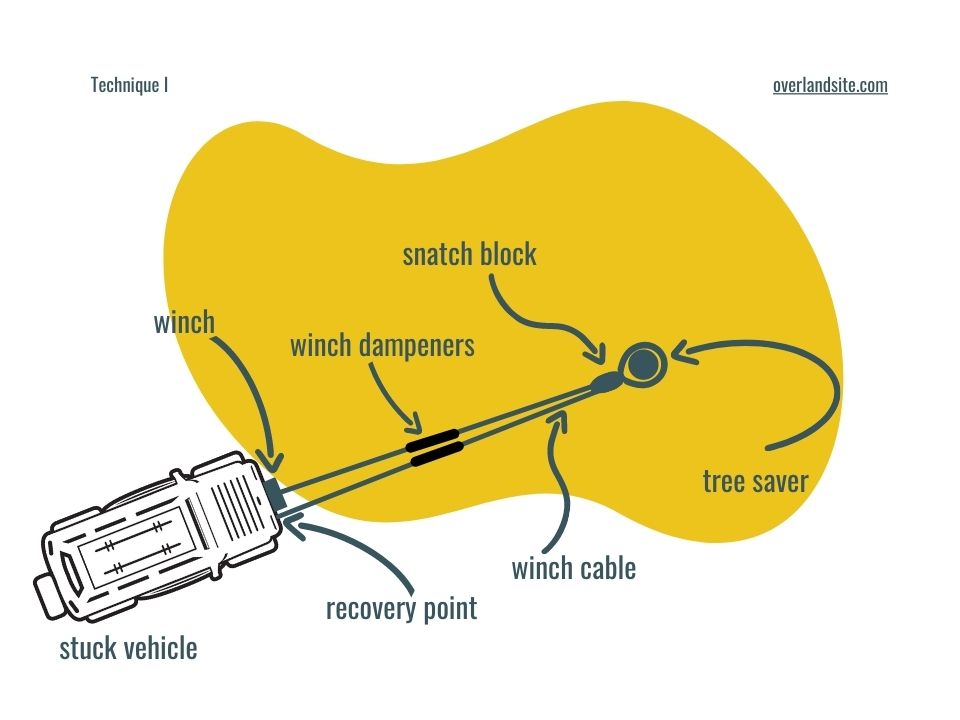
- First, park the winching vehicle on a stable and flat surface, if possible. Make sure there is a nearby stable and reliable anchor point, such as a tree or a third vehicle.
- Connect the grab hook and the chain to the anchor point. You can either loop the chain around the anchor point and then attach the chain back to itself with the hook or attach the hook directly to the anchor point.
- Disengage the clutch on the winching vehicle, then pull out the cable or line from the winch and thread it through the snatch block.
- Connect one end of the cable to the grab hook end-fitting and attach the end-fitting to the anchor point of the stuck vehicle. If there is no anchor point on the stuck vehicle, you can use a recovery sling or tow strap to loop it around a sturdy part of the frame.
- Simply, start the engine of the winching rig and begin winching as usual
Note that you will need additional accessories such as wire rope, a recovery sling, a chain-and-grab-hook end-fitting, and a winch winder for easier winching.
Additional Equipment Required for Using a Snatch Block Pulley System
To make the most out of a snatch block pulley system, it’s recommended to use it in combination with several other pieces of equipment.
These may include a shackle, a winch winder, a hook end-fitting, line dampeners, tow straps, a chain-and-grab-hook end-fitting, and other accessories designed to enhance the safety and efficiency of the recovery process.
Safety Considerations When Using a Snatch Block Pulley System
As with any piece of automobile equipment, a snatch block can be dangerous if not used properly. Therefore, it is crucial to exercise caution and follow safety guidelines to avoid accidents.
Different types of snatch blocks are suitable for different types of jobs.
Keep in mind that using a snatch block can increase the pulling power of a winch up to twice its default capacity. However, this also means that the block itself, as well as the anchor point, vehicle, and wire cable, must be capable of handling the additional force.
Moreover, each snatch block has a specific maximum load capacity, so it’s essential not to exceed the rated line pull when using the snatch block to recover a stuck vehicle.
Using a line dampener during snatch block and winch recovery operations is also recommended to prevent the wire cable from snapping back or breaking under stress.
By following all the necessary safety precautions and guidelines when using a snatch block, you can minimize the risk of accidents and ensure a successful vehicle recovery.
Winch guides you may be interested in:
Conclusion
Snatch blocks can be a great addition to your overlanding vehicle recovery kit. When choosing a snatch block, it’s important to select a high-quality product, such as the ARB Snatch Block that you can rely on in tough situations.
With a wide range of options available on the market, finding the right snatch block to meet your requirements shouldn’t be too difficult.
And with a dependable snatch block and other necessary tools in your recovery kit, you can be better prepared to handle unexpected obstacles on your overlanding adventures.
Disclaimer: The references to ARB recovery products in this article are no coincidence. No secret that we’ve partnered up with ARB to test and review their products over a very long and hard adventure, driving the Pan American Highway. So far we are extremely happy with their products.
Save the different techniques to your phone: